



Protecting Doors From Trolley Impacts
Protecting Doors From Trolley Impacts
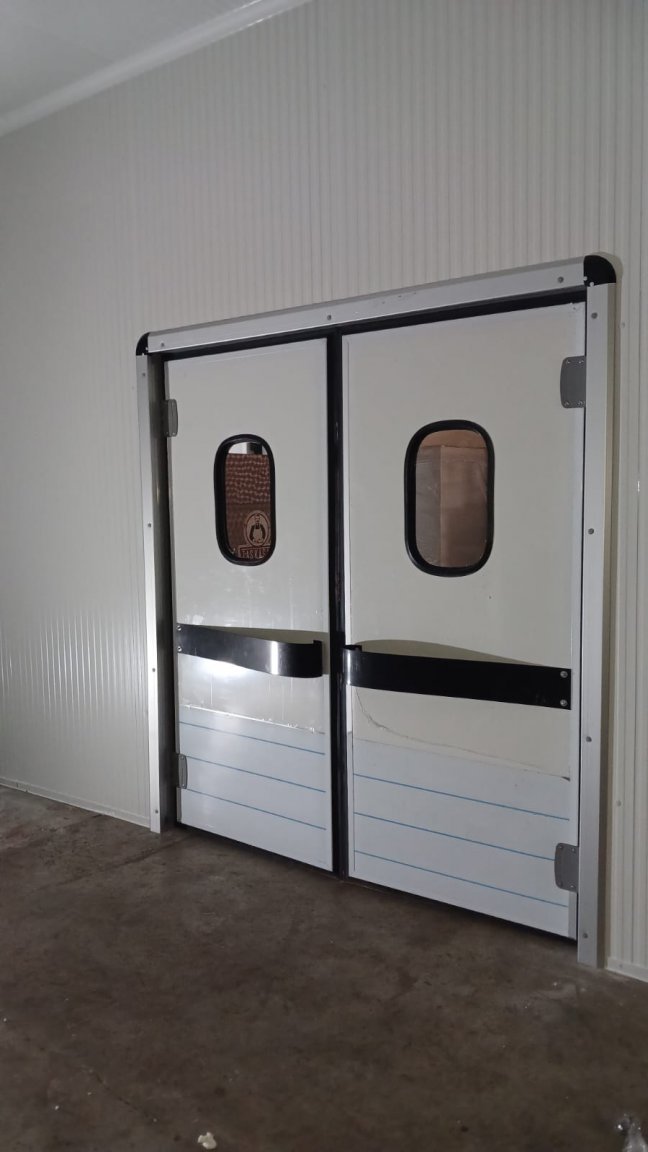
Repeated marks on an insulated swing door can reveal where a trolley, tray edge or handle meets the leaf. Before adding a protective plate, establish what is making contact and whether that contact is part of the door’s intended operation.
Protection works best when it matches the equipment and the actual contact point.
Find the Contact Point
Compare marks on the door with the trolley in its normal loaded condition. Check projecting tray rims, handles and corners, not just the trolley body. Look on both sides of the doorway.
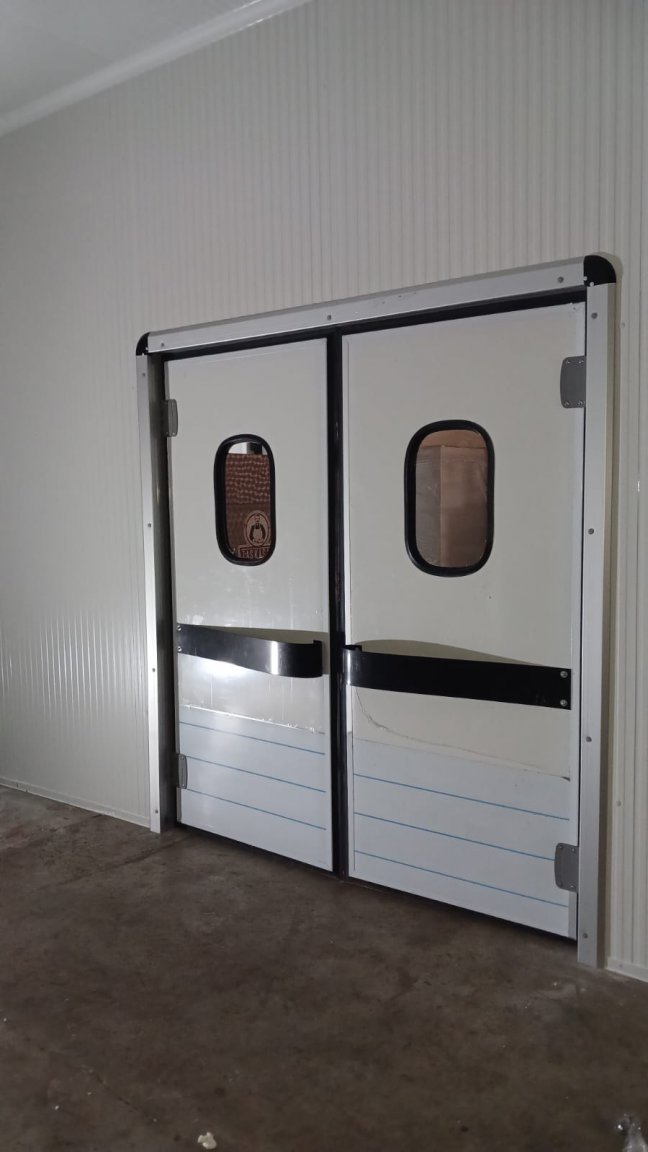
A low plate may cover scuffs near the bottom of the door while leaving a higher tray edge unprotected. Record the contact height from the finished floor and photograph the corresponding part of the trolley.
Scratches alone do not establish the cause. A repeating mark is a reason to check the route and equipment, rather than assume the door needs a thicker cover.
Match Protection to the Door
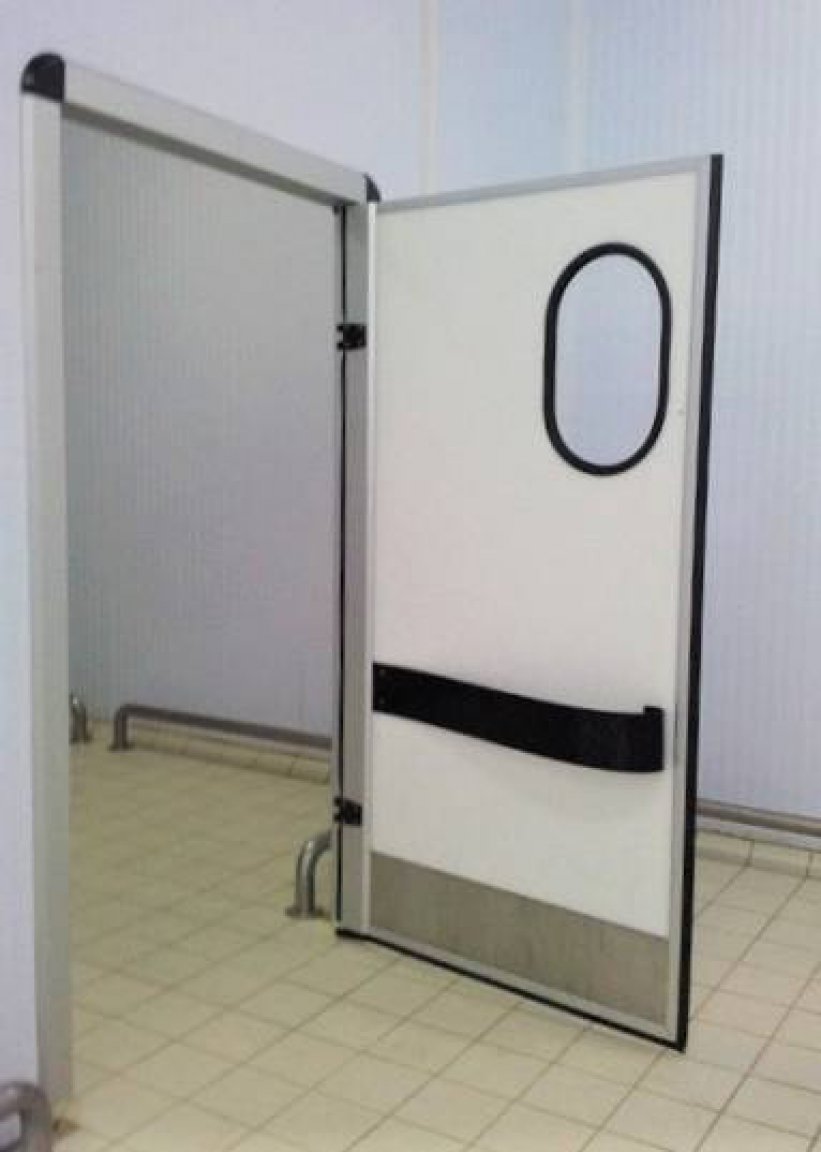
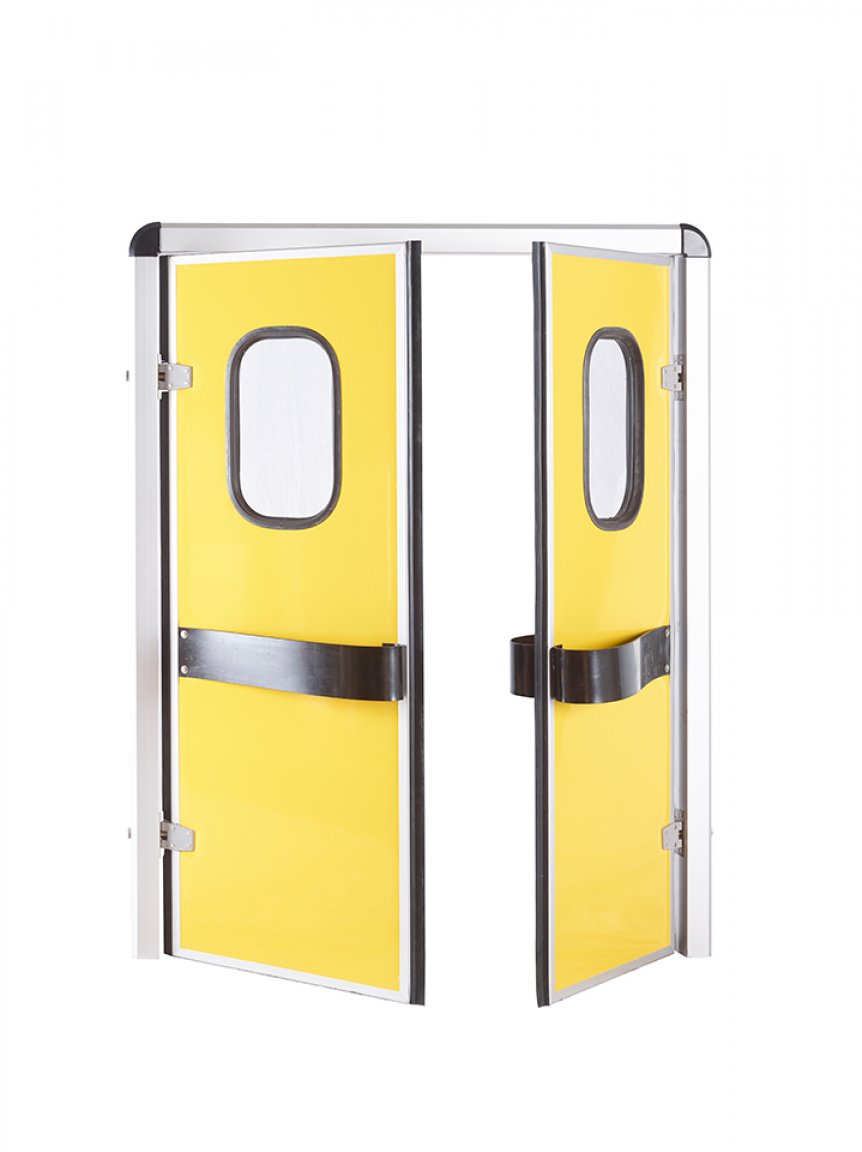
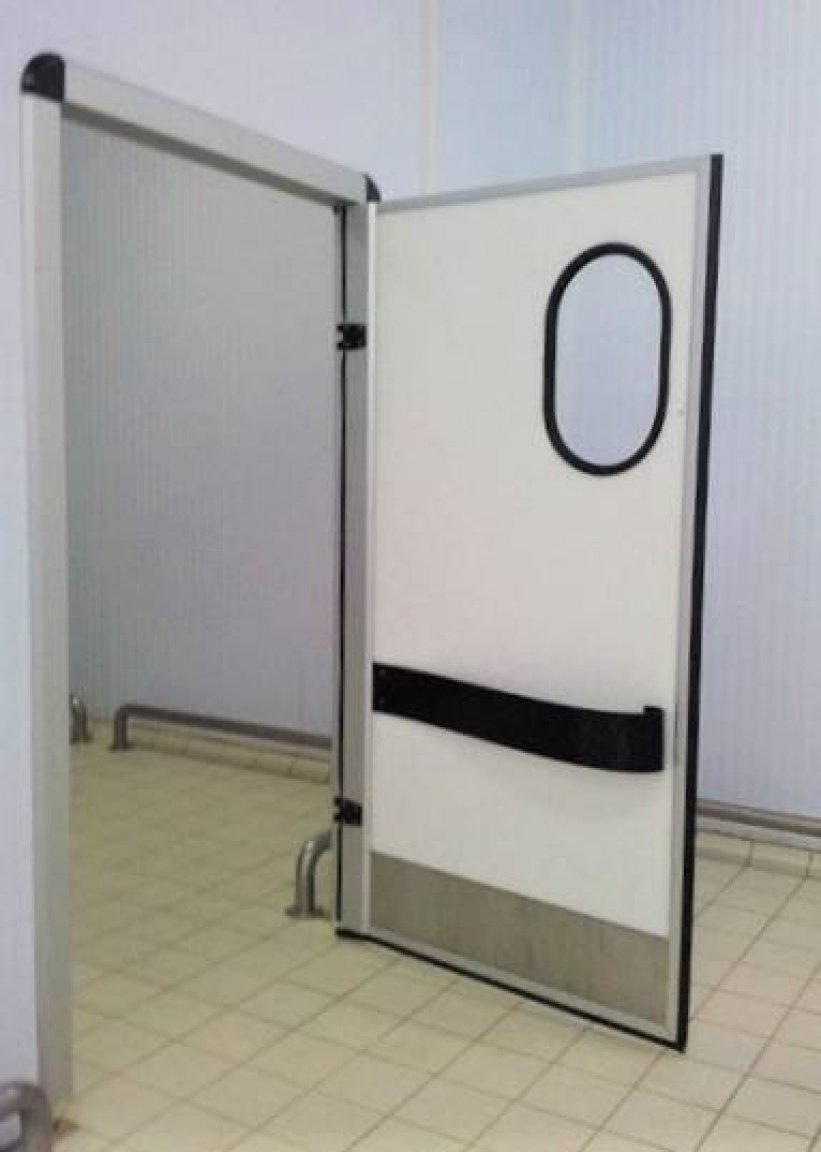
Kick plates, impact plates and bumpers serve different purposes depending on their design. A surface plate can provide a wear layer, while a purpose-designed bumper may cushion contact. The manufacturer should confirm which assembly suits the expected use.
Adding a plate does not turn every insulated swing door into an impact-rated door. Where a model is intended to be pushed open by handling equipment, contact must occur as specified by the manufacturer. Otherwise, use the intended opening method and keep the load clear of the leaf.
Check the Approach Angle
Repeated damage near a leaf edge or hinge may point to a turning problem. Check whether the load reaches the door squarely or catches it as the trolley changes direction. Worn or sticking castors can also make a trolley difficult to steer.
Consider a loaded tray projecting beyond the trolley frame. It may reach the door before any bumper on the trolley does. Protecting the wrong height leaves the original contact unchanged.
If the same corner keeps striking the same place, review the approach and available turning space before selecting another protective component.
Keep Movement Within Its Limits
Surface impact and excessive opening travel are different problems. A door can be pushed beyond its intended opening range even when its face is protected.
Where travel-limiting hardware is needed, its selection and position must suit the door. A door stop or limiting post should not be treated as a vehicle impact barrier unless specifically designed and rated for that purpose.
Avoid adding improvised stops or heavy plates without checking how they affect the hinges, closing action and available passage.
Inspect After Repeated Contact
Include these points in routine checks:
- Loose fixings or movement in protective components.
- Cracked bumpers or damaged plates.
- Exposed sharp edges.
- Changes in how the leaf moves or returns.
If damage affects secure attachment or normal door movement, arrange an assessment before continuing normal use.
Record where damage recurs. Replacing the same part without addressing the contact point or trolley route can leave the cause unresolved.
For product information, see Insulated Swing Doors. Share trolley dimensions, load details and photographs of contact marks with Frigovetta Refrigeration System when discussing suitable protection.